










Who regulates the handling of residual concrete water?
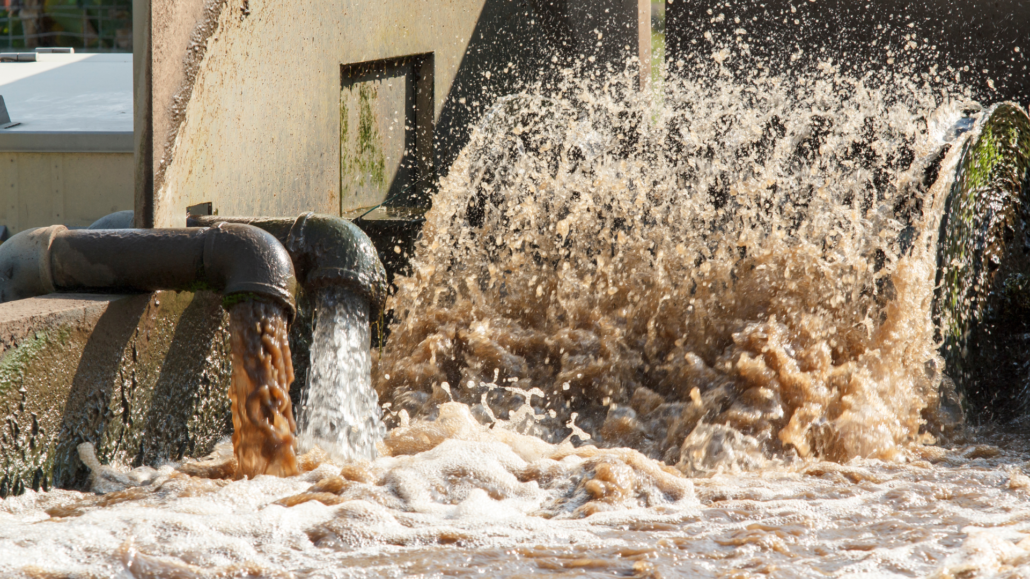
Behaving in an environmentally conscious manner, avoiding emissions: the demands placed on concrete producers are growing. In addition, legislators are restricting the use of fresh water for rinsing truck mixers and in production. And afterwards? Where to put it? Certainly not directly into the ground, because such wastewater can be contaminated with environmental toxins such as chromate CrVI. Unfiltered admixture in concrete production is also prohibited.
Who actually regulates the handling of residual concrete water? The European standard EN 1008:2002 with the status of a German Industrial Standard (DIN). All details regarding sampling, testing and assessing the suitability of water as mixing water in concrete production can be found there. This European standard is based on CENfTC 104 (Concrete and related products) and, at the German level, on the results of the NABau working committee for concrete technology, adopted by national standardisation institutes in many European countries.
Why is not every type of water suitable as make-up water?
The quality of the concrete depends on the quality of the mixing water – whether it be setting time with the start and end of setting, strength development, compressive strength or corrosion protection of the reinforcement. Depending on the intended use, concrete recycling water requires a different composition. Just as there are standardised test methods for checking cement for specified properties, there are also standardised test methods for checking the quality of mixing water. These distinguish between drinking water (suitable for concrete production without testing according to 98/83/EC), groundwater, surface water, industrial process water and concrete recycling water. The latter must meet the requirements of Annex A of EN 1008:2002. Seawater or brackish water, on the other hand, can generally only be used for unreinforced concrete or concrete with integrated metal parts – and wastewater is completely unsuitable for good concrete quality. If waters are combined (see A.2.2), special requirements apply to combined water.
What testing requirements must recycled concrete water meet?
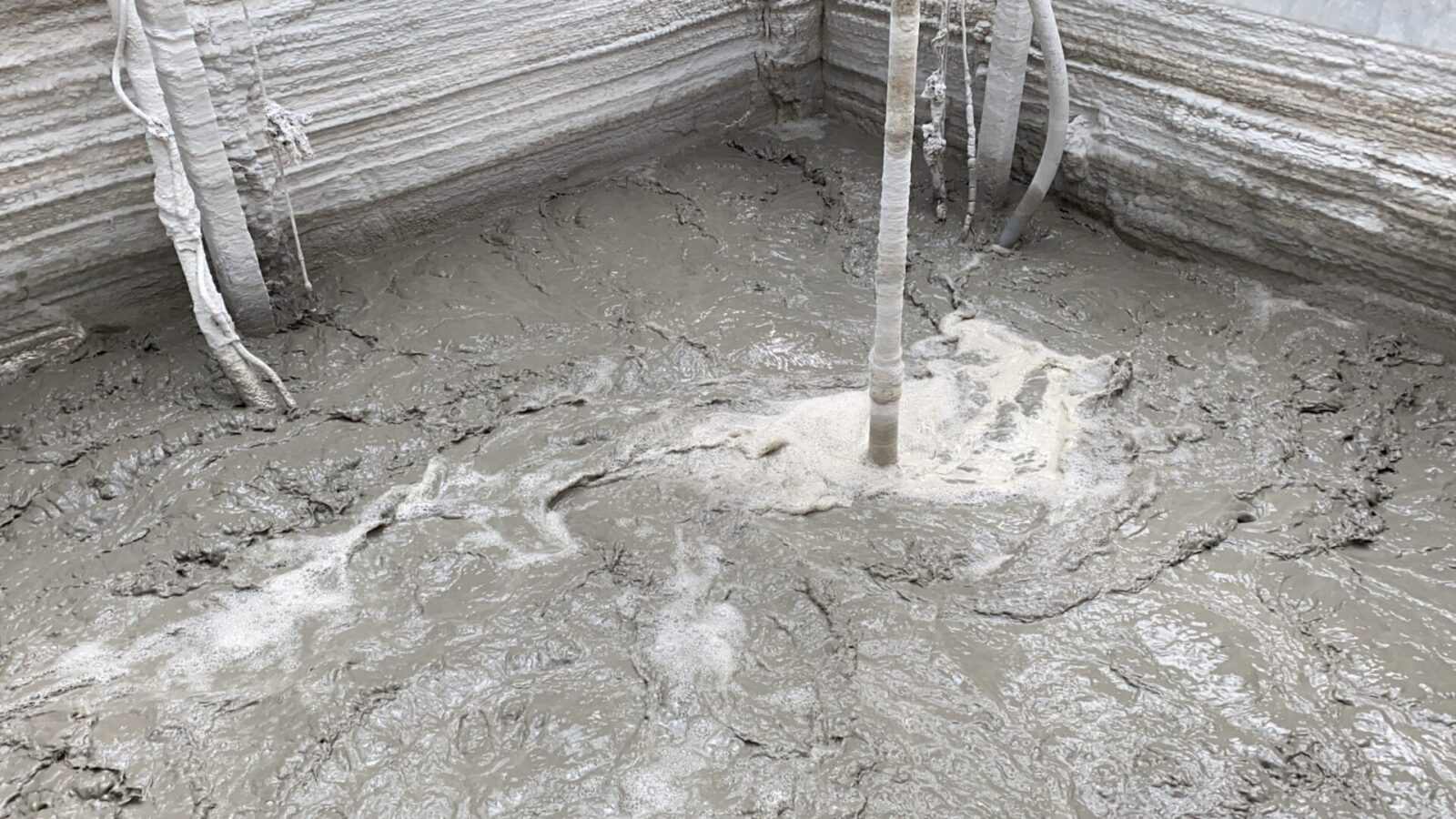
This is shown in EN 1008:2002 in the form of tables. What can be in concrete recycling water – and in what concentration? Only traces of oils and fats are permitted. If cleaning agents are found, the foam must collapse within two minutes. The colour of recycling water should be slightly yellowish or lighter. Suspended solids? More than 4 ml of settling volume is not permitted. Concrete recycling water may only smell of drinking water and slightly of cement. If it contains fly ash, it may smell slightly of hydrogen sulphide. The pH value must also be correct; the chloride content in mg/l can be found in the table, depending on the concrete quality. In addition, concrete recycling water must not contain more than 2,000 mg of sulphur per litre, and the alkali content (if you add alkali-sensitive aggregates) must not exceed 1,500 mg/l. The concrete recycling water is also tested for contaminants: what is the proportion of sugar, phosphates, nitrates, lead and zinc?
What counts as recycled water for concrete, and what about recycled water density?
Appendix A of EN 1008:2002 specifies the requirements for the use of recycled water from concrete production reprocessing plants. This includes water
– from residual
concrete – for cleaning the mixing drum of stationary
mixers, truck mixers, concrete pumps – produced during
sawing, grinding and blasting of hardened concrete – produced during the production of fresh concrete
You may only extract this water from basins that have suitable devices for distributing the solids in the residual water homogeneously. The recycled water in the basin must be stored in such a way that it is protected from contamination. Its recycled water density fluctuates, meaning that it always contains different concentrations of fine particles. Their grain size is normally less than 0.25 mm. Did you know? Aggregates obtained during reprocessing may also be reused in accordance with EN 206-1:2000.
How do you use density measurement of recycled concrete water to ensure good concrete quality?
Recycled water or combined water may be used as additional water for concrete with or without reinforcement or embedded metal parts, as well as for prestressed concrete. To do so, the following requirements must be met: The additional mass of solids in the concrete that you achieve when using recycled water must be less than 1% (rn/rn) of the total mass of the aggregates contained in the overall mixture. The effect of using recycled water on special concrete qualities such as exposed concrete, prestressed concrete, aerated concrete and concrete exposed to aggressive conditions must also be taken into account. The amount of recycled water must always be distributed evenly over the daily production.
But what if the production process requires a higher amount of solids? Even then, you can still use recycled water – provided that the concrete subsequently meets the specified performance characteristics. When using recycled water in concrete, you can significantly improve the concrete quality by automatically and continuously measuring the density of the recycled water – and feeding the value directly into your production control system.
What do you need to consider when it comes to recycling water density?
If the residual water has a recycling water density of more than 1.01 kg/l, measures must be taken to ensure that the solids are evenly distributed. The mass of the solids must be determined on the basis of their density using Table A.1 “Solids in residual water” in standard EN 1008:2002. This shows the respective ratio of recycled water density, mass of solids and recycled water volume. This calculation assumes a grain density of 2.1 kg/l to estimate the solids in the residual water. Are you measuring other densities? Then you can recalculate the table using the following equation:
– Wn = mass of solids in residual water, in kilograms per litre
– p = density of residual water, in kilograms per litre
– PI = grain density of solids, in kilograms per litre
How do you regularly measure the density of recycled concrete water in accordance with standard EN 1008-2002 – A.5?
If you use recycled water in concrete production, you must take samples from the residual water tank to measure the density. The density must be determined at least once a day – when you expect the highest density. Better still, you should measure the density continuously. The use of automatic devices is expressly permitted for this purpose. The dry solids content (kg/l) and the residual water volume (l/l) must be considered in relation to the recycled water density. 2.1 kg/l indicates an average solids density; a recycling water density of 1.07 kg/l is better. This corresponds to a solids mass of 0.134 kg/l, with a residual water volume of 0.936 l/l.
The corresponding overview table shows the required values for the respective recycled water density (kg/l), residual water volume (l/l) and mass of solids (kg/l). Please note that recycled water must not be used for high-strength concrete or concrete with air-entraining agents (LP concrete); the use of recycled water for the production of exposed concrete is permitted but not recommended. The manufacturer is responsible for carrying out an initial test and checking the properties of the concrete.
What are the advantages of density measurement with water density standardisation?
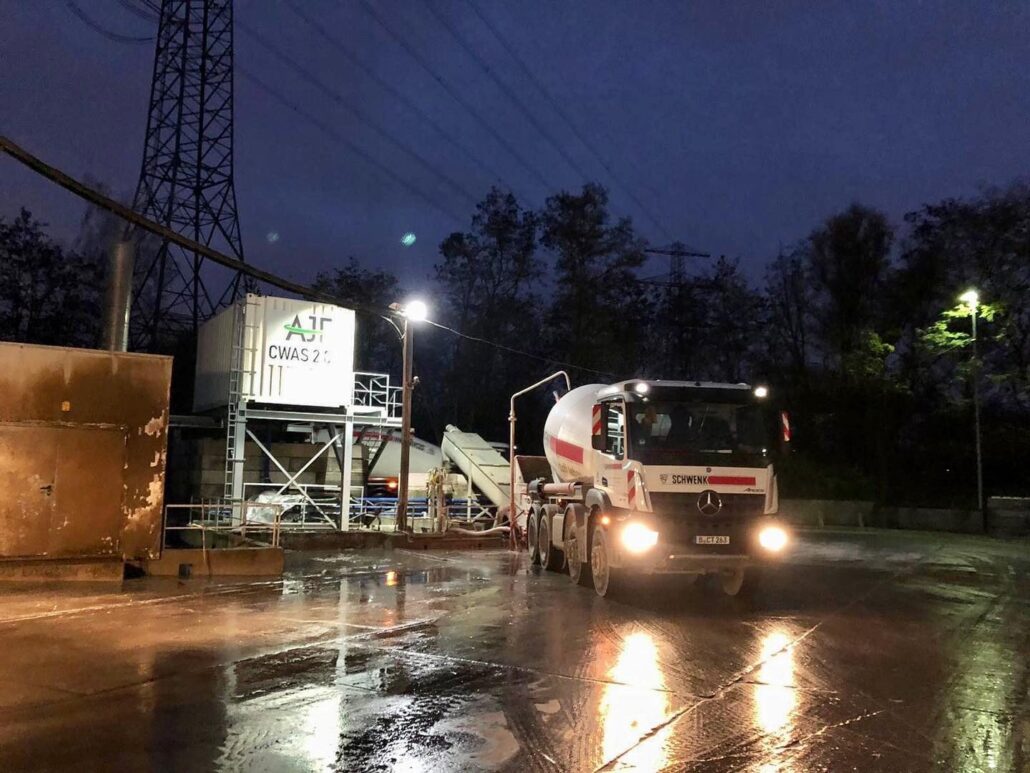
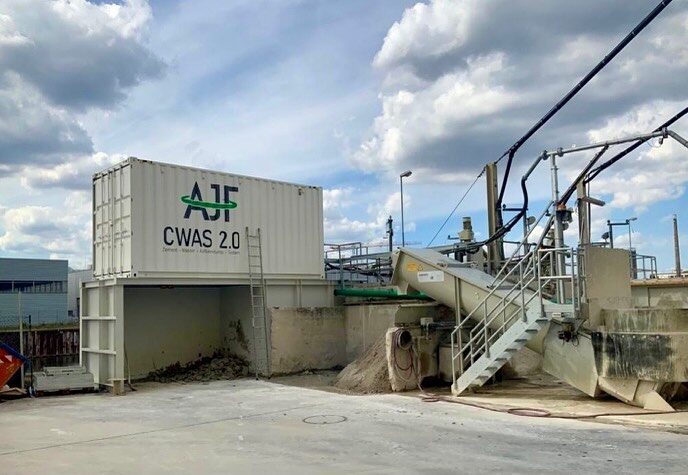
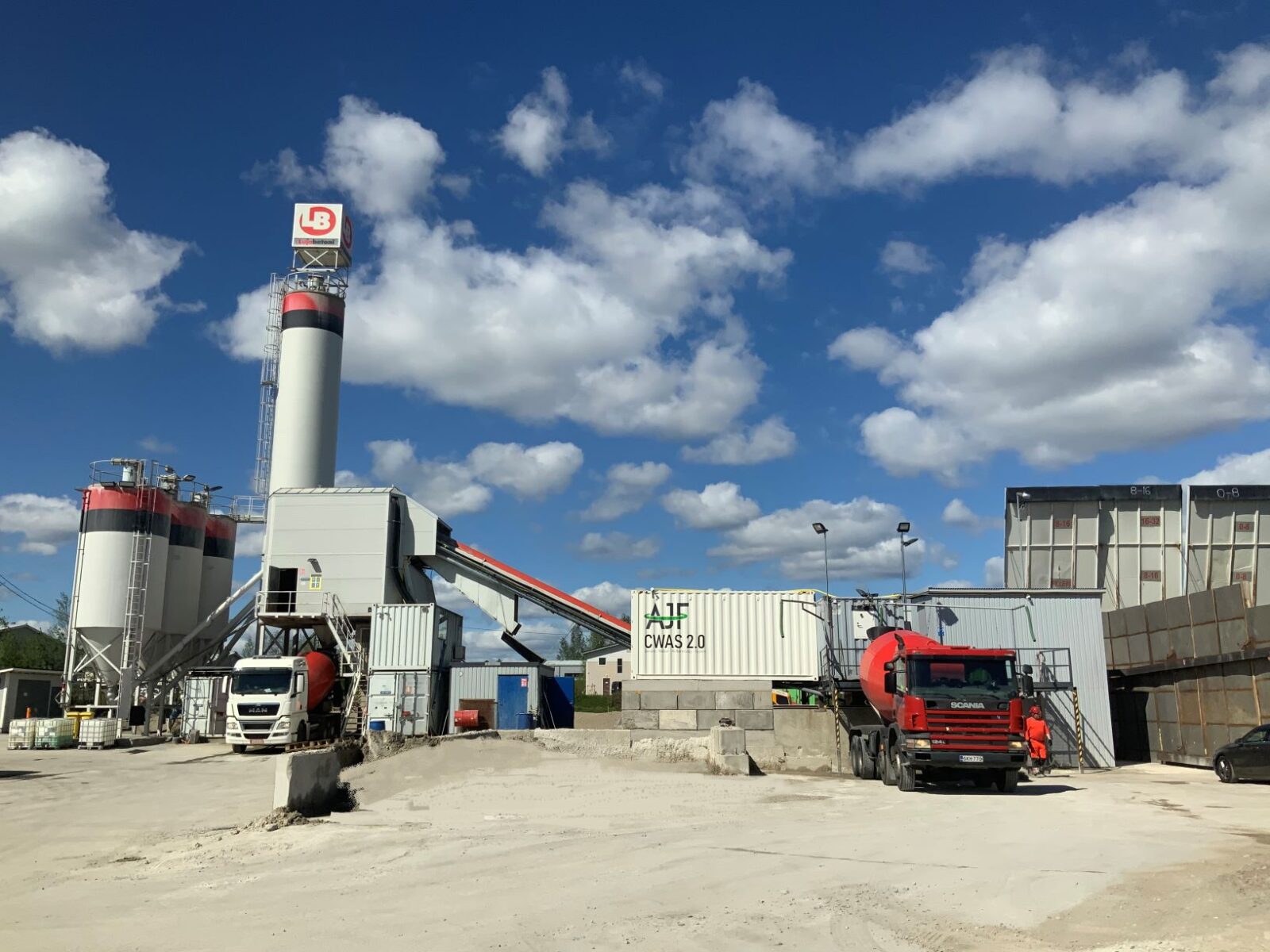
Innovative cement-water treatment plants such as CWAS from AJF automatically treat concrete recycling water. Their intelligent control technology guarantees a consistently low concrete recycling water density of 1.07 kg/litre throughout the year. The patented system follows the principle of water density standardisation; you select the desired recycling water density of certain materials precisely and comply with all water specification parameters.
Short-term limit exceedance? A density measurement reliably records the current density value, which is reduced again by adding fresh water or water from the AJF CWAS system.
A specially adapted control system with permanent density monitoring in the CWAS plant prevents any limits from being exceeded. In short, you receive cement slurry that you can reuse up to 100 per cent with the aim of achieving first-class concrete quality!
You are currently viewing a placeholder content from YouTube. To access the actual content, click the button below. Please note that doing so will share data with third-party providers.
How density measurement simplifies processes – and makes concrete production more cost-effective
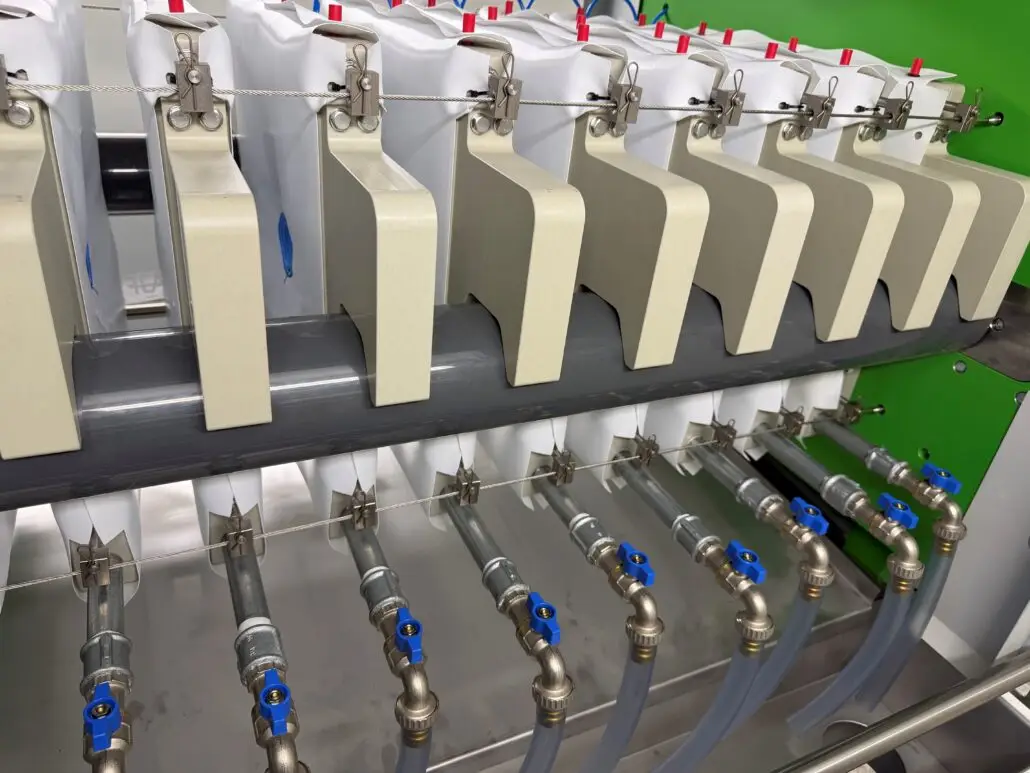
The fully automatic water treatment system in accordance with DIN EN 1008, CWAS from AJF, is already in use at numerous concrete manufacturers and continuously measures the recycled water density in the residual water basin within the applicable standard limits. Tailored individually to the company, plant location and determined capacity, residual water basins, settling basins, cisterns and surface water basins can be incorporated into the modular concept. The CWAS cement water treatment plant, which can be connected to over 30 sensors, takes care of every single step for you – from controlling the probes to retrieving the (wastewater) values. A clean, water- and energy-saving compact solution that eliminates the need for traditional residual water basin arrangements with cyclones and sludge settling basins – which also saves on personnel costs. Intelligent technology also takes additives into account, removing no more solids from the concrete residual water than is necessary according to DIN specifications. Conclusion: Reusing recycled water with a constant density in a targeted manner is an investment that pays for itself after a short time – because you spend less money on disposal – and makes your concrete measurably cheaper to produce!