











Why are filter presses needed?
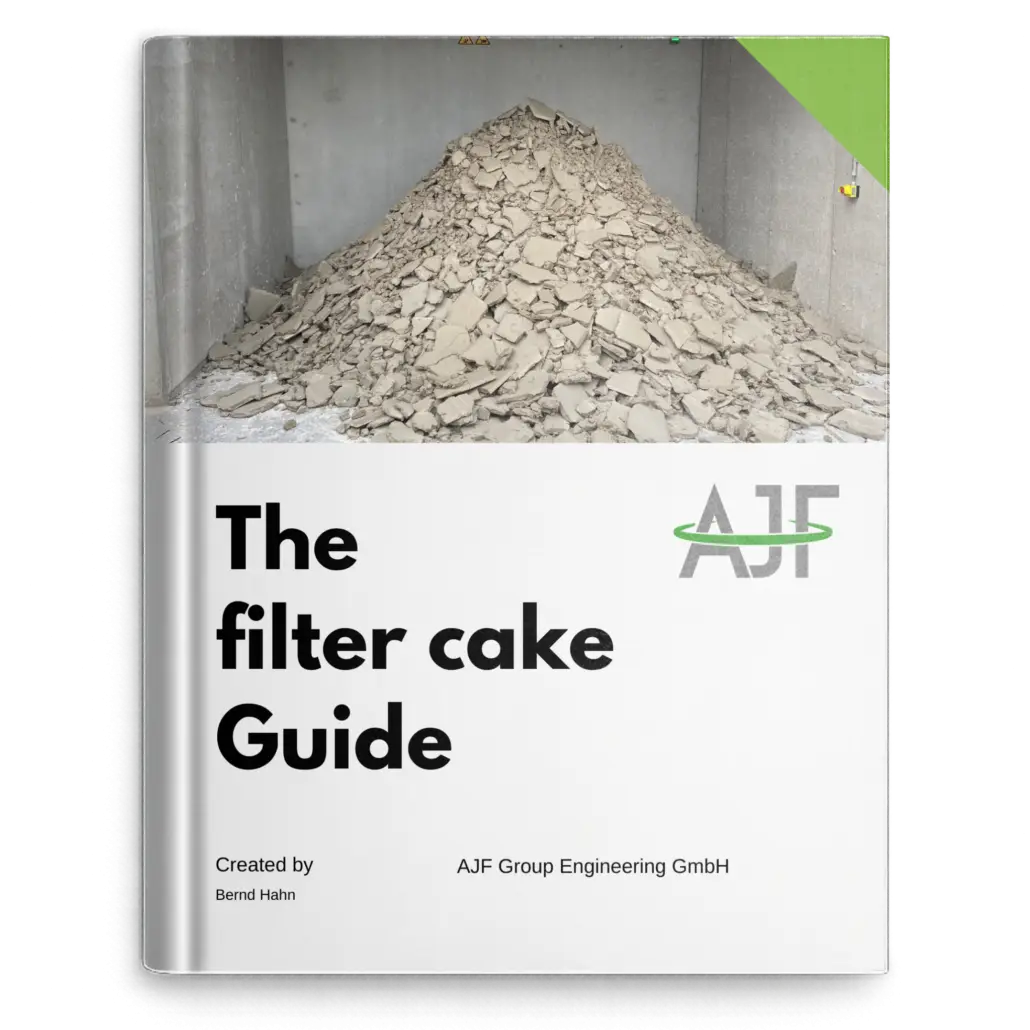
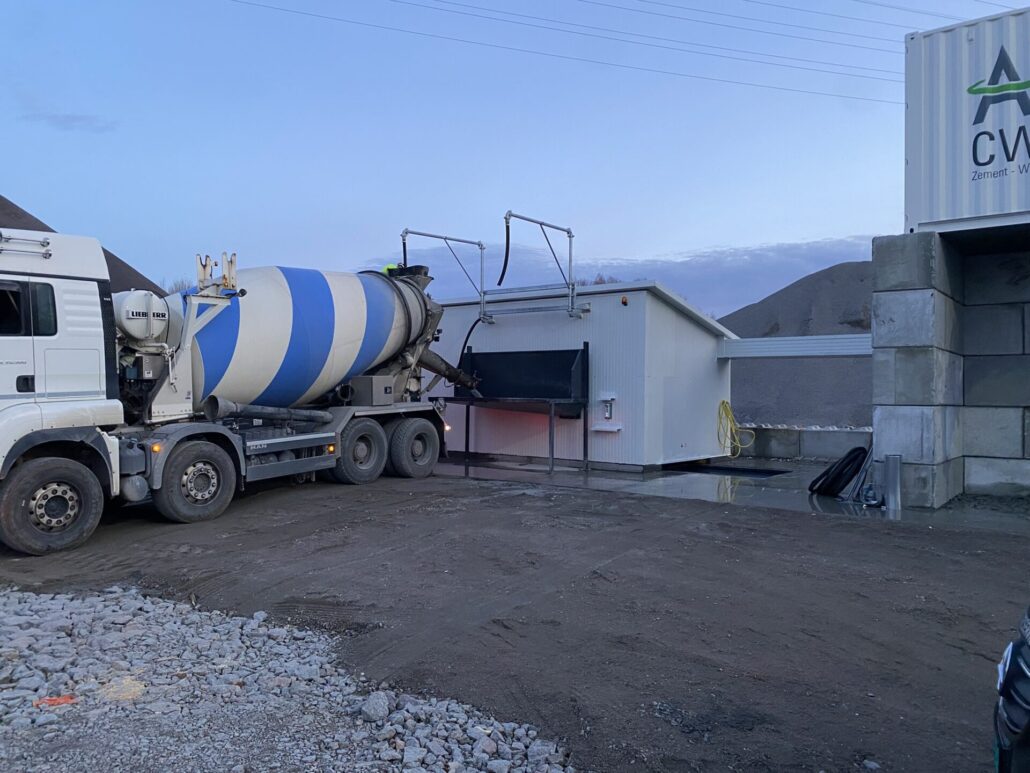
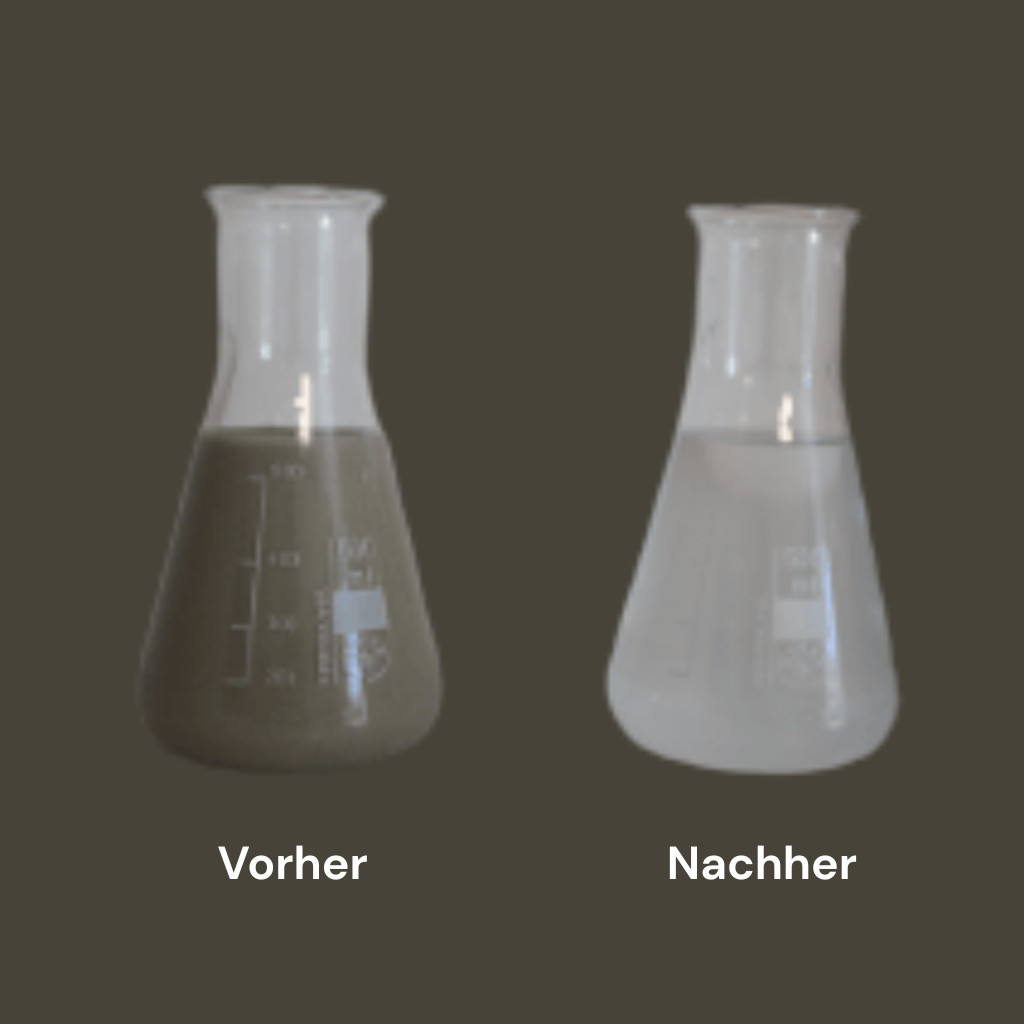
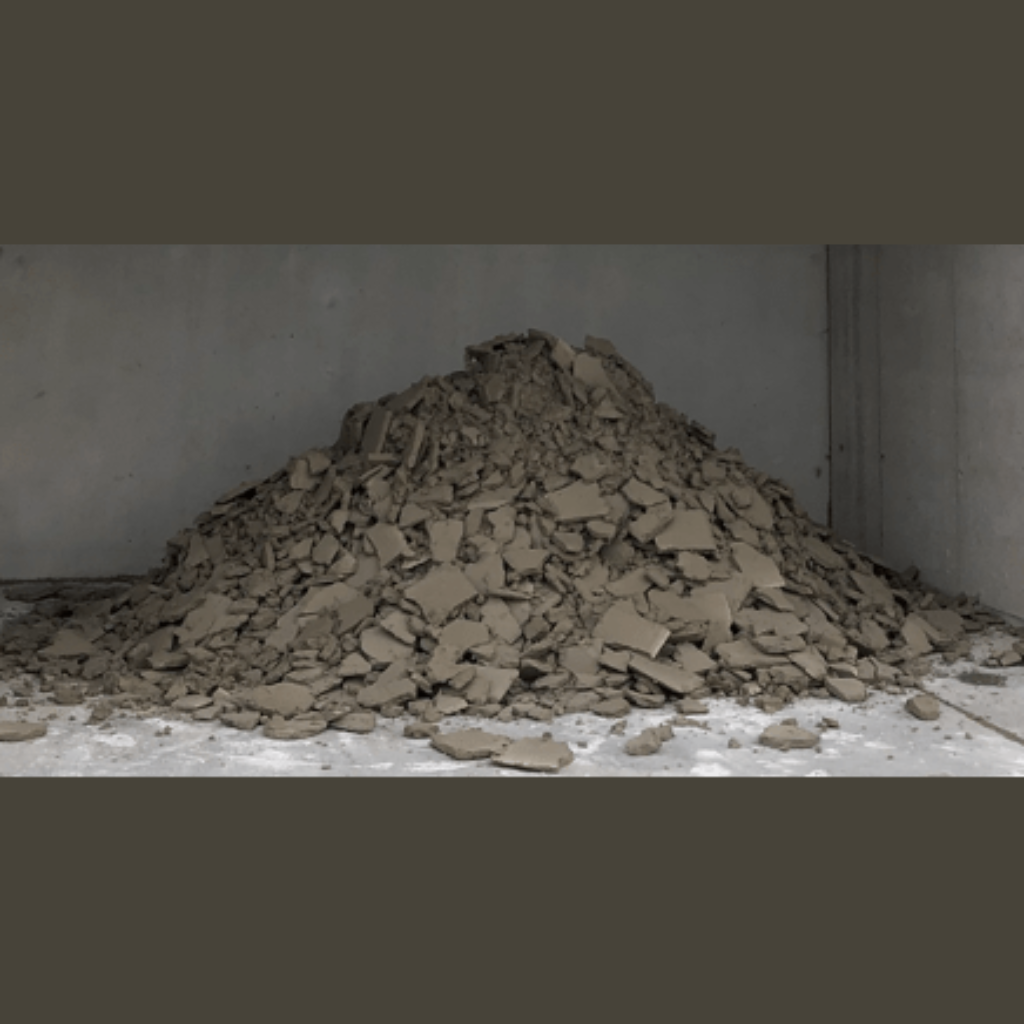
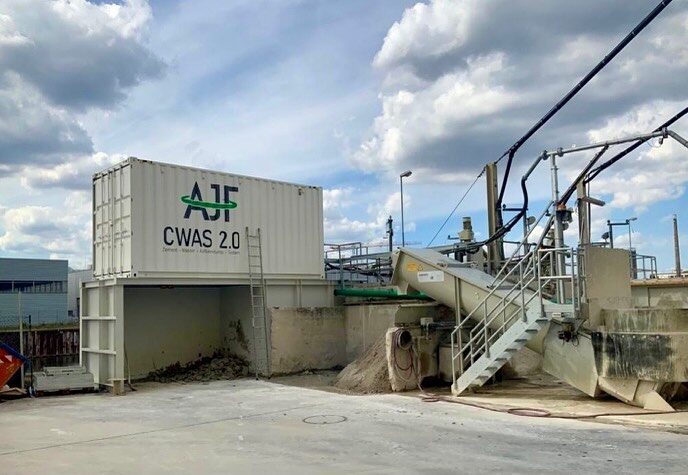
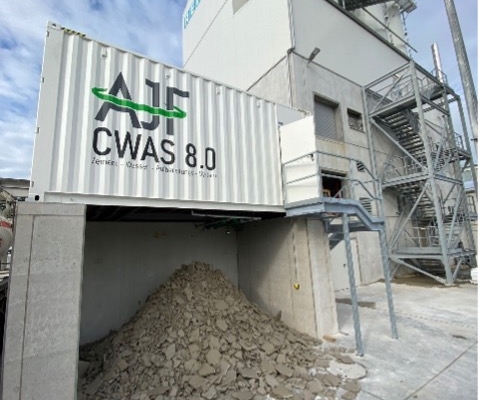
The task of a filter press is to clean suspensions. Solids contained in the liquid are separated from it by means of a filter press. One example of such an application is a filter press for concrete (concrete waste water). Here, the recycled water is cleaned using a filter press and the fine sand and cement (concrete sludge) contained in the water is filtered out. The result is clean, clear water and an easily transportable filter cake.
How does a filter press work?
In principle, all filter presses work in the same way. Water is pumped through filter cloths and thus filtered out.
The essential components for constructing a filter press are filter plates and filter cloths, as well as a base frame with a hydraulic cylinder that compresses the filter plates.
The filter plate is designed as a half-shell in which the filter cloth is placed. Two compressed half-shells form a filter chamber. The more filter plates are used, the greater the filter volume of the press. The filter plates are guided on the base frame and compressed tightly together by means of hydraulic cylinders.
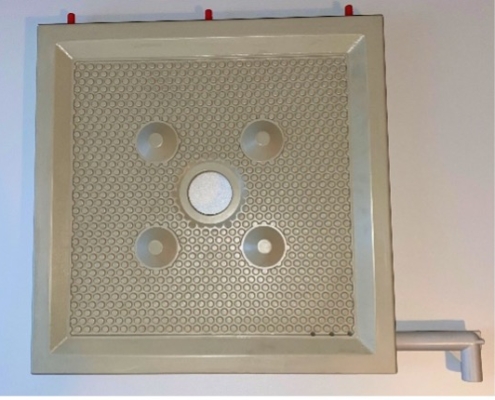
The contaminated water is pumped into the chambers. The sediments are filtered out by the filter cloths, and the water flows through the cloths, purified, out of the press. As water flows continuously over the chambers and thus over the filter cake that has already formed, the filtration effect is increasingly improved. The filter cake acts as an additional filter element.
The sediments thus form the filter cake in the half-shells. Contrary to what one might assume, the actual pressing of the filter cakes does not take place with the hydraulic cylinder, but with the inlet pressure and the flow rate of the feed pump.
High-quality systems have a pressure sensor at the press inlet for this purpose. Only when a defined back pressure and correspondingly low flow rate are reached is the water supply switched off and the press opened. If the back pressure to be achieved is correctly adjusted, the filter cakes fall out of the press immediately upon opening and are sufficiently dry for removal or further use. At least firm enough to hold their shape.
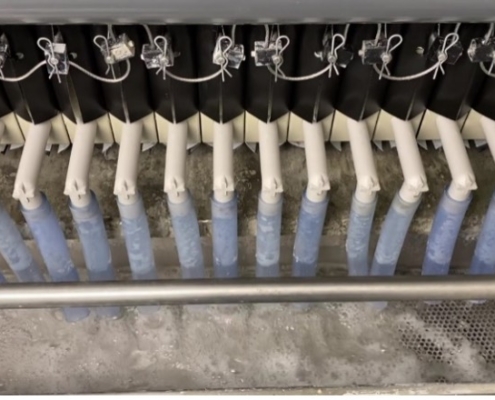
On our YouTube page, you can find more interesting videos about our water treatment products.
What is the difference between a chamber filter press and a membrane filter press?
Both filter press systems serve the same purpose: the mechanical filtering of sediments from liquids. At first glance, the basic design does not necessarily differ. Both presses have a base frame, filter plates and filter cloths, as well as a hydraulic cylinder for closing and compressing the filter plates. In both the membrane filter press and the chamber filter press, the filter cake forms between the plates, while the clean, filtered water flows over the filter cake and the filter cloths out of the press. In both systems, the dirty water is usually fed in a pressure- and flow-controlled manner.
The big difference lies in the details. In a chamber filter press, the filter plates are designed as rigid half-shells. A membrane filter press, on the other hand, has a membrane integrated into the filter plates, which can be activated after the pressing process and can “repress” the filter cake. This leads to additional dewatering of the filter cake.
To do this, the integrated membrane is filled with either air or a liquid, usually water, and the chamber volume between the filter plates is additionally reduced. In this case, the filter cake is actually pressed through the membrane.
Depending on the configuration of the filter press, both sides or just one side of the chamber can be equipped with a membrane. The ratio of investment costs to the required residual moisture in the filter cake is often used as a decision-making aid here. Membranes on both sides further reduce the residual moisture in the filter cake, but also increase the investment costs.
What are the advantages of a membrane filter press?
In addition to the main advantage already mentioned of additional dehumidification of the filter cake by means of post-pressing via the membrane, the membrane filter press offers further advantages that are helpful in certain applications.
Since the membrane allows the chamber volume to be reduced, it is possible to obtain a dry filter cake even when the chambers are not completely filled, for example due to insufficient dirty water or sediment in the water. In addition, the throughput capacity of the filter press can be increased thanks to the membrane technology.
Can a filter press be automated?
With the right system design and control, filter presses today operate fully automatically. Feeding can be started and stopped, for example, based on the fill level or density in the wastewater tank. It is important to ensure that a filtration cycle is always run through to the end in order to obtain a sufficiently dry filter cake.
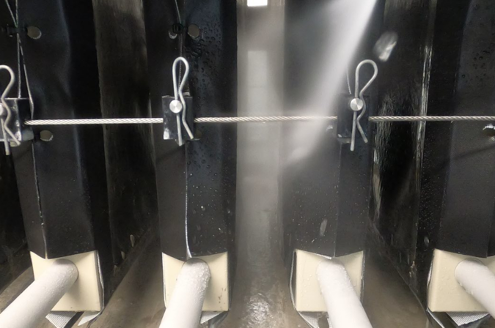
However, when dealing with difficult media, such as concrete residual water (recycled water) or cleaning water from screed production, it is very important to pay attention to the condition of the filter cloths.
The remaining components, such as cement in the water, react and harden. This clogs the filter cloths and prevents them from functioning properly. To prevent hardening, we recommend cleaning the filter cloths daily.