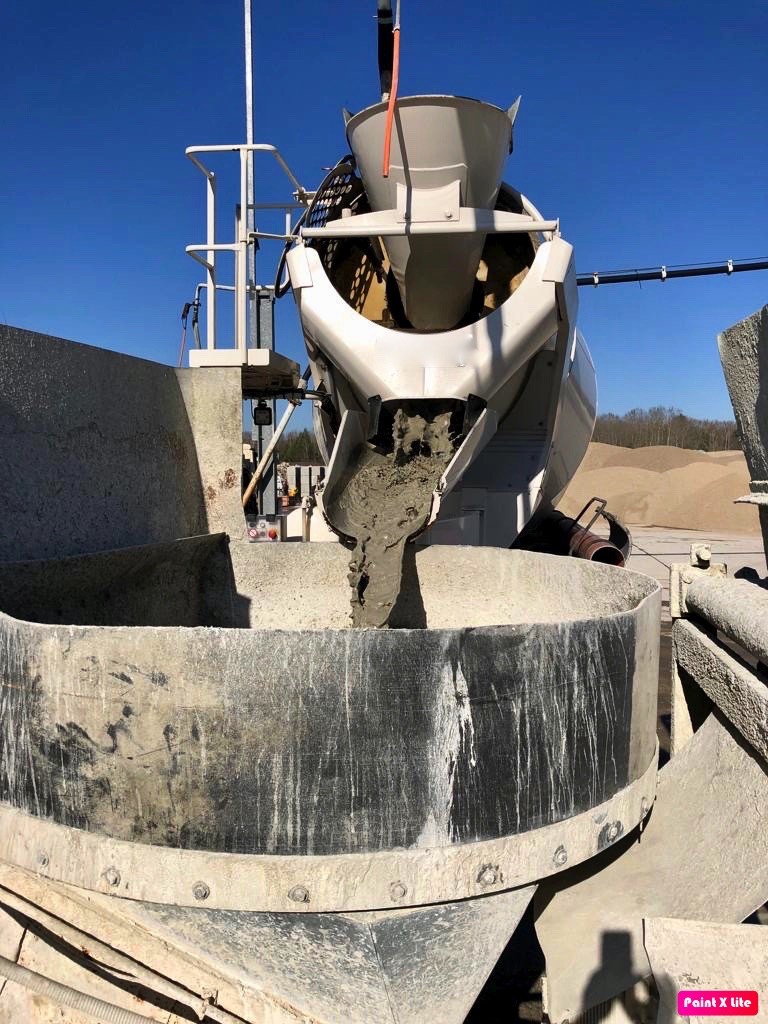










Residual concrete, sawing and grinding concrete parts – sludge is continuously produced in the concrete industry. Gravel pits also have to contend with large amounts of sludge every day when extracting sand, chippings and gravel. A powerful sludge filter press turns it into purified water and highly dewatered filter cake. That’s why it matters how you plan your residual water treatment!
Why use filter presses for concrete sludge?
Concrete grinding sludge, screed and precast production, road construction and more: nothing works without chamber filter presses that filter concrete sludge, separate solids from liquids and separate the sludge into its components. The goal: clean water and a filter cake with a high degree of dewatering. Why all this effort? Concrete slurry and concrete wash water cannot be discharged into the public sewer system as they are. How does it work? A pump sends the concrete sludge under high inlet pressure into the sludge filter press, where solid filter cake gradually deposits in the filter chamber. Once the optimum amount of moisture has been pressed out, the filter cake falls out of the chamber.
How does a sludge filter press work?
The sludge filter press works with filter cloths stretched over parallel, recessed filter plates, which together form the filter chamber and are mounted in a base frame with a hydraulic cylinder. This presses the filter plates together – the number of which varies depending on the plant volume. The pressure sensor signals that the water flow has stopped and the sludge filter press is full. Then the press opens and the filter cake falls out, pressed to a solid consistency and ready for transport. An even lower residual moisture content can be achieved with a membrane filter press: at the end of the feeding process, an integrated membrane presses the filter cake further. However, all this will only run smoothly and economically in the long term if you keep an eye on the condition of your sludge filter press. Particles such as cement residues tend to harden and can clog the filter cloths. You should therefore clean your filter cloths daily to improve efficiency and extend their service life. To do this, you can either remove the filter cloths for washing or treat them with a high-pressure gun and a special active cleaner.
How do backwash and residual water treatment work in practice?
The law stipulates that any concrete waste must be processed in an environmentally friendly manner. In gravel pits, concrete plants and ready-mixed concrete production, filter presses for concrete sludge play a central role in building material recycling, alongside recycling machines and agitators. Depending on the situation on site, customised chamber filter presses may be required, which can convey material from drop heights of several metres. This ensures that there is always sufficient air and space below, and the operator does not have to constantly remove washed-out material! This reduces factory traffic and also lowers energy costs. Let’s get started: Pre-separation of coarse materials > 0.2 mm ensures that only fine particles such as pigments, cement or flour grains < 0.2 mm reach the processing stage. This is an automated process that eliminates the need for manual intervention by the operator. A compressed air diaphragm pump pumps the recycled water – e.g. with an average density of 1.05 to 1.07 kg/l – into the
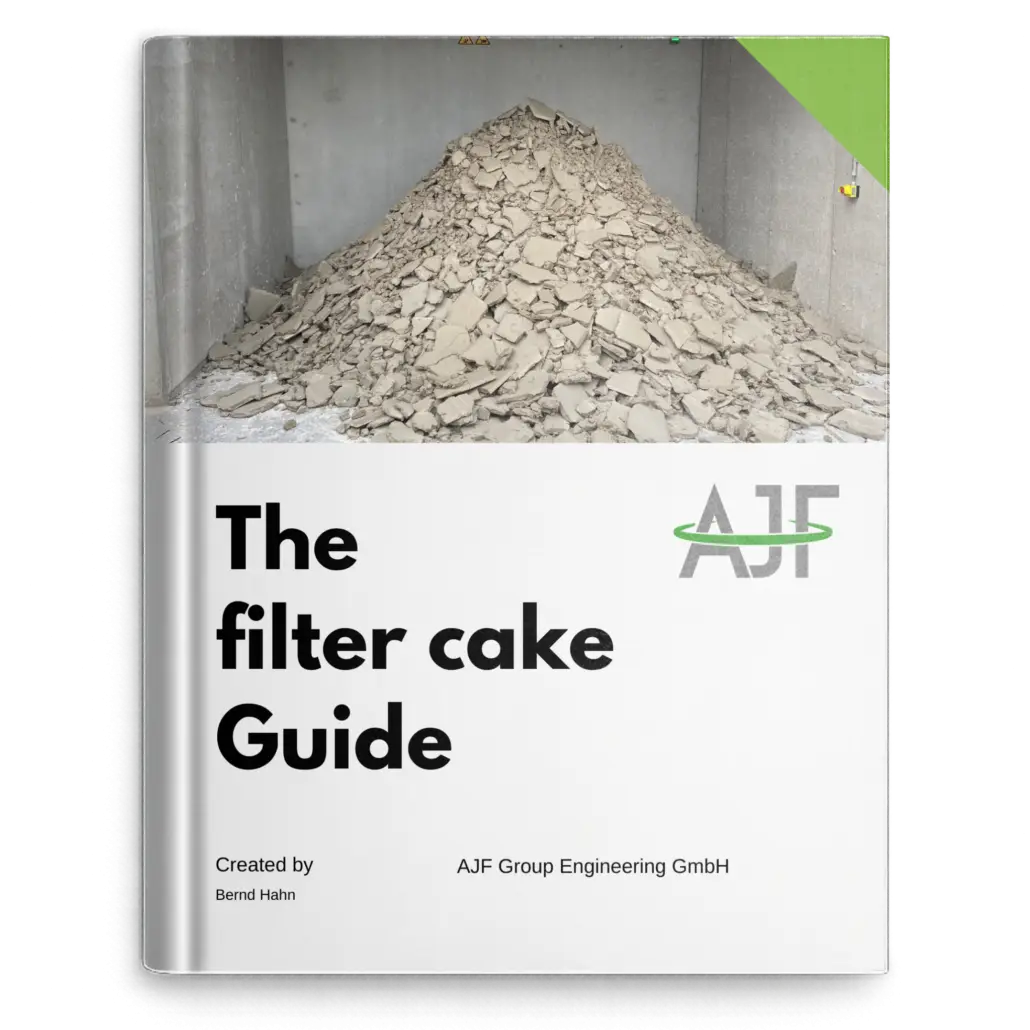
Chamber filter press. Done! The sludge filter press shakes and ejects the filter cake, ready to be used, for example, as RC material or gravel in road and path construction. Because what applies in the bakery also applies in the concrete industry at the end of the day: this cake is too good to throw away!
What distinguishes a modern filter press for concrete sludge?
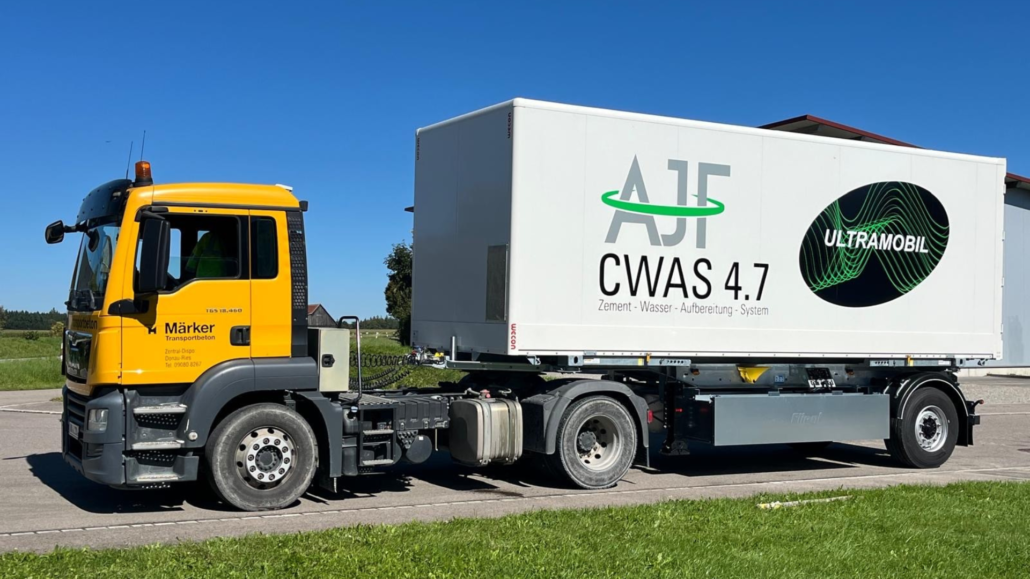
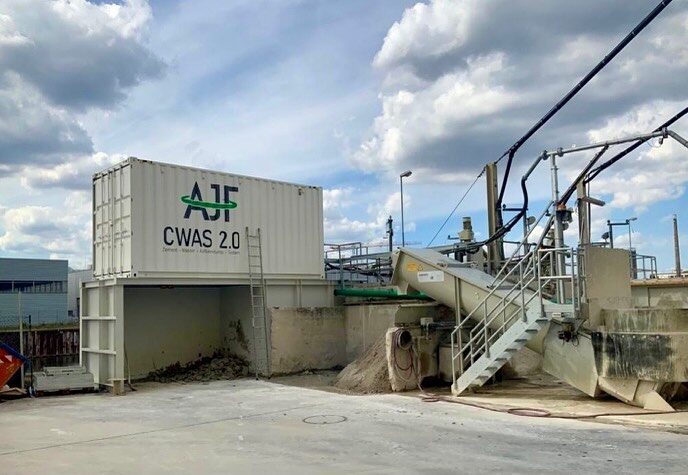
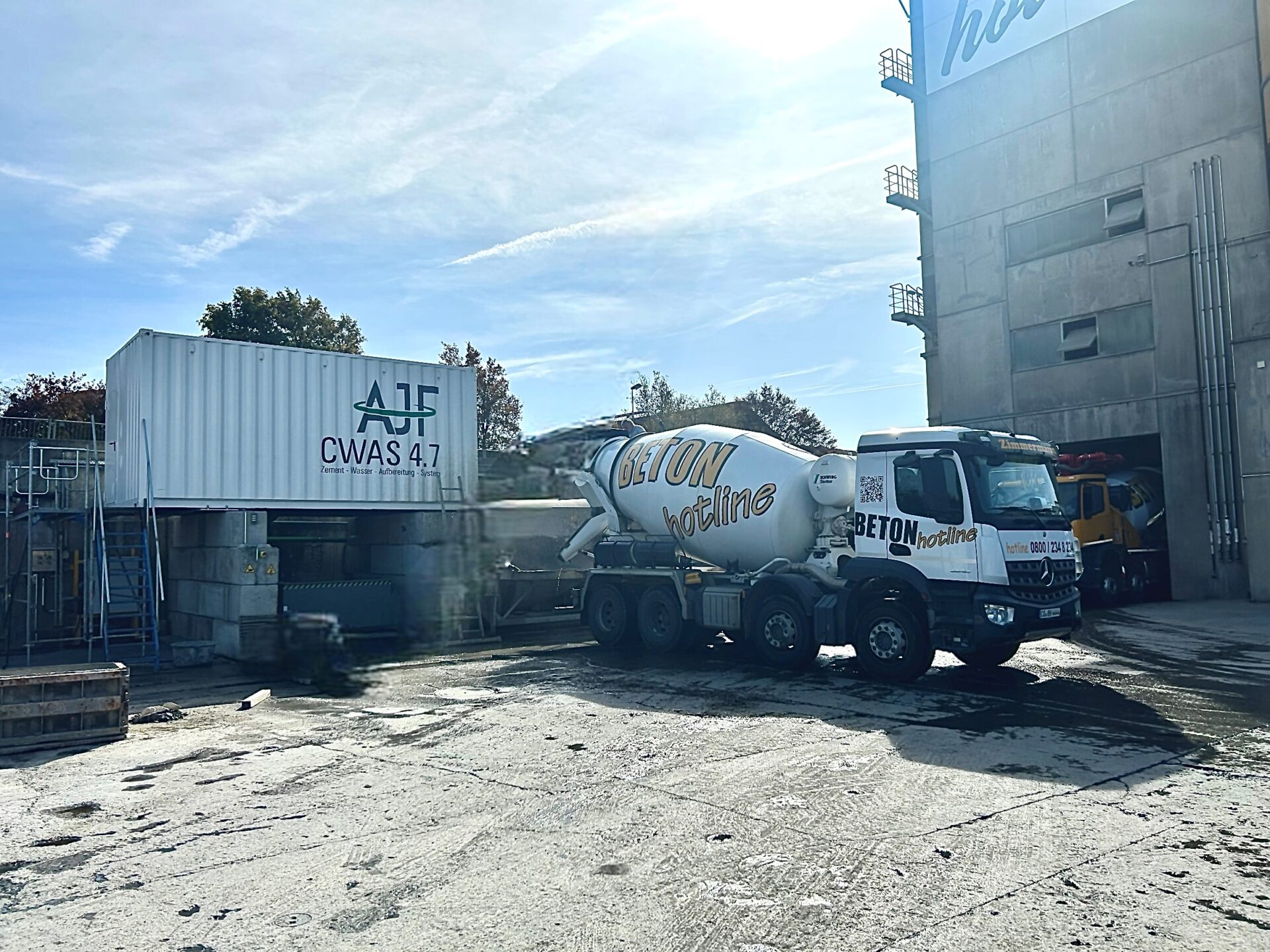
When working with a filter press for concrete sludge, there are several basic options: Firstly, stationary, with a manually operated filter press for concrete sludge or as a fully automatic sludge filter press (emptied by a vibrating device); in this case, all units are mounted on a base frame. The most flexible solution? A sludge filter press that is completely assembled in a container with everything you need, so that you can achieve your goal even without a permanent operating building – as a compact system consisting of a sludge filter press, feed pump and sludge depot. A filter press for concrete sludge that automatically checks the fill level and density in the residual water basin – and starts feeding as required. The hut and container are tailored to your requirements as a concrete manufacturer and processor – winter-proof, so that work can continue even at sub-zero temperatures! Of course, comprehensive, innovative concrete recycling plants also include density measurement and pH neutralisation.
Would you like to save water and landfill costs?
An AJF filter press for concrete sludge contains all the components needed to get started right away – and thus performs automated residual water treatment to perfection, whether stationary or mobile. Water density standardisation is part of this – and allows you to precisely define the residual water density in all parameters. A fully automatic treatment plant for cement residual water such as CWAS
– Simplifies handling and transport
– reduces the costs of fresh water, landfill and waste water disposal
– saves personnel costs
– reduces the volume of sludge produced
– quickly pays for itself as an investment
Curious about how you can clean and filter concrete slurry more economically and innovatively? Would you like to learn more about water density standardisation or filter cake processing? Simply get in touch…